Beyond the Device: Beauty Technology’s Exosmart Workshop Highlights the Importance of Clinical Education
Led by cosmetic physician Dr Marjan Yazdian, a Sydney Exosmart workshop explored why structured training, procedural consistency and ongoing support are essential when introducing emerging medical-aesthetic technologies into clinical practice.
In an industry driven by innovation, investing in the latest aesthetic technology can be an exciting step for a clinic. New devices offer opportunities to expand professional capabilities, explore different clinical workflows and respond to developments in medical aesthetics.
But purchasing a device is only the beginning.
The real challenge lies in what happens next: how practitioners are trained, how protocols are established, how procedures are documented and how new technology is responsibly integrated into everyday clinical practice.
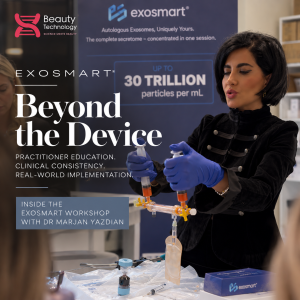
That was the central theme of a recent Exosmart healthcare-professional Exosmart workshop hosted by Beauty Technology at its Bondi Junction headquarters in Sydney.
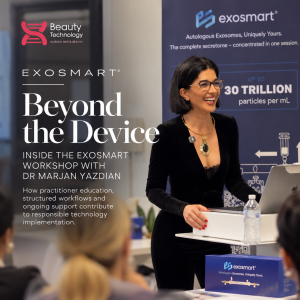
Led by cosmetic physician Dr Marjan Yazdian, the education-focused event brought practitioners together to examine structured autologous preparation workflows, procedural consistency and the practical considerations surrounding the introduction of Exosmart into Australian clinics.
For aesthetic business owners and healthcare professionals, the workshop offered a timely reminder that successful technology implementation requires more than equipment. It requires education, governance and a clear operational strategy.
Putting Practitioner Education at the Centre of Aesthetic Innovation
As interest in regenerative aesthetics and autologous preparation technologies continues to develop, healthcare professionals are increasingly being asked to assess sophisticated equipment and its potential place within their clinical services.
However, understanding a device’s features is not the same as understanding how to incorporate it responsibly into practice.
Beauty Technology‘s Sydney workshop focused on the processes behind Exosmart, encouraging practitioners to consider the complete preparation workflow rather than viewing the device as a standalone purchase.
The session examined structured preparation, procedural consistency, documentation and clinical implementation considerations.
Dr Yazdian emphasised the importance of taking a considered approach when introducing new technology.
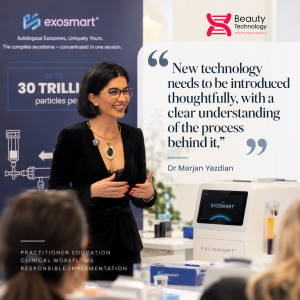
“New technology needs to be introduced thoughtfully, with a clear understanding of the process behind it,” said Dr Yazdian.
“Workshops like this allow practitioners to examine the workflow in detail, ask questions and consider how it may be responsibly integrated into their own clinical environment.”
Her message reflects an important consideration for aesthetic businesses: a device’s value depends not only on its technical capabilities but also on the systems, knowledge and professional oversight supporting its use.
What Is Exosmart?
Exosmart is a clinician-focused medical device designed to support the preparation and concentration of specified autologous blood-derived components.
Autologous refers to material originating from the same individual, rather than a separate donor.
According to the supplied media release, Exosmart is included in the Australian Register of Therapeutic Goods as a Class IIb medical device, ARTG 526925.
Its stated intended purpose relates to concentrating plasma proteins, exosomes, plasma vesicles and blood components of autologous origin for non-transfusional use.
The technology forms part of a developing area of clinical interest surrounding blood-derived preparations and regenerative medicine.
However, it is important to distinguish the preparation and concentration functions of a medical device from claims about the clinical effectiveness of any subsequent treatment.
ARTG inclusion for a specified intended purpose does not establish that every proposed regenerative or aesthetic application is approved, safe or clinically effective.
For practitioners considering Exosmart, understanding the device’s intended purpose, applicable regulatory requirements and supporting clinical documentation is an essential starting point.
Why Structured Clinical Workflows Matter
One of the key themes explored during the workshop was procedural consistency.
In professional clinical environments, consistency is not simply about efficiency. It is an important part of quality management, documentation and responsible patient care.
When introducing a new medical device, clinics need to consider how the technology fits into their existing systems.
That may include practitioner competency, documented procedures, infection prevention, equipment maintenance, recordkeeping and escalation processes when something does not go according to plan.
For technologies involving autologous blood-derived components, appropriate handling, identification, traceability and compliance with relevant clinical requirements are particularly important.
A structured implementation process helps practitioners understand their responsibilities and identify where additional training or procedural safeguards may be required.
The Exosmart workshop provided an opportunity for healthcare professionals to examine these broader considerations alongside the device’s preparation workflow.
Rather than treating training as a one-off demonstration, the session highlighted the importance of understanding the complete clinical process.
Beyond the Purchase: What Aesthetic Clinic Owners Should Consider
For clinic owners, investing in professional technology is both a clinical and commercial decision.
Equipment costs are often the most visible part of that investment, but they are rarely the only consideration.
Training, staff competency, documentation, consumables, maintenance, workflow integration and ongoing supplier support can all influence the practical demands of introducing a new device.
Before adding technology to a clinic, business owners should be able to answer several important questions:
- Is the technology appropriate for the clinic’s clinical scope and patient population?
- What training and professional competencies are required?
- Are documented procedures and clinical governance systems in place?
- What ongoing support, technical assistance and education will be available?
- How will the clinic monitor compliance, quality and operational performance?
These considerations are particularly relevant for technologies involving complex biological preparation processes.
The goal is not simply to introduce another service. It is to ensure the clinic has the professional capability, resources and governance arrangements needed to support the technology’s appropriate use.
For aesthetic businesses seeking sustainable growth, this broader approach to technology investment can be just as important as the initial purchasing decision.
Beauty Technology’s Approach to Education-Led Implementation
Beauty Technology Director Phil Willmann said the company’s Australian rollout of Exosmart places practitioner education and ongoing support at the centre of implementation.
“Exosmart is not simply a device that should be delivered to a clinic without the education and support surrounding it,” said Willmann.
“Our focus is on structured training, procedural consistency and helping healthcare professionals understand the complete preparation workflow. Dr Marjan’s practical clinical perspective made this an extremely valuable session for the practitioners who attended.”
The Sydney workshop forms part of Beauty Technology’s broader education program, which includes healthcare-professional workshops, clinical onboarding and implementation support.
This approach reflects a wider issue facing the medical-aesthetic industry: how technology suppliers and clinical businesses can work together to support responsible adoption.
For clinic owners, access to knowledgeable educators and ongoing technical resources may help reduce uncertainty during implementation.
For practitioners, education-led workshops provide opportunities to ask questions, review workflows and consider whether a technology is appropriate for their professional setting.
Ultimately, effective implementation requires both supplier support and independent clinical judgement.
Clinical Governance: The Foundation of Responsible Technology Adoption
Clinical governance may not generate the same excitement as a new device launch, but it remains central to responsible healthcare delivery.
In practical terms, clinical governance encompasses the systems and responsibilities used to support safe, accountable and quality-focused care.
When introducing medical technology, clinics should consider how existing governance arrangements apply to the device and any associated procedures.
This includes understanding regulatory obligations, practitioner qualifications, patient assessment requirements, informed consent, documentation, incident management and ongoing quality review.
For clinic owners, these responsibilities cannot simply be transferred to a technology supplier.
While manufacturers and distributors can provide device-specific education and technical information, healthcare professionals remain responsible for determining whether and how a device is used within their scope of practice and applicable legal requirements.
This distinction is particularly important in emerging areas of aesthetic medicine, where commercial interest may develop faster than the evidence supporting particular clinical applications.
The emphasis on structured preparation and professional education at Beauty Technology’s workshop offers a useful example of how these conversations can be brought into the technology adoption process.
Why Ongoing Support Matters After Installation
A successful device installation does not necessarily mean a successful clinical implementation.
Staff members change, procedures evolve and questions often emerge once equipment becomes part of daily operations.
For this reason, ongoing education and support should be considered from the outset.
Clinics may need access to refresher training, updated technical documentation, maintenance guidance and opportunities to discuss implementation challenges with appropriately qualified professionals.
Business owners should also establish internal processes for reviewing whether a new technology continues to meet the clinic’s operational and clinical requirements.
This may include checking staff competencies, reviewing documentation practices and ensuring procedures remain consistent with the device’s intended purpose.
Beauty Technology has indicated that its Exosmart education program will continue through professional workshops, clinical onboarding and implementation support.
For participating practitioners, this creates opportunities to build on their initial training as they consider the technology’s place within their clinical environment.
A Broader Conversation for Australia’s Aesthetic Industry
The Sydney Exosmart workshop also highlights an important shift in how aesthetic technology should be evaluated.
Innovation remains a powerful driver of industry development, but innovation alone is not enough.
Clinics must balance commercial opportunities with clinical responsibilities, regulatory requirements and the practical realities of delivering professional services.
That means asking more questions before making an investment and maintaining those conversations long after a device has been installed.
What evidence supports the proposed use? What qualifications are required? What systems need to be established? How will staff be trained? What support is available if problems arise?
These are not barriers to innovation. They are essential considerations for responsible technology adoption.
For Australian aesthetic businesses, developing this level of operational maturity can support clearer decision-making and more sustainable implementation.
The Future of Aesthetic Technology Starts With Education
Beauty Technology’s Exosmart workshop, led by Dr Marjan Yazdian, brought an important industry issue into focus.
While new medical-aesthetic devices may attract attention for their technical capabilities, responsible implementation depends on the knowledge and systems surrounding them.
From structured preparation workflows to practitioner competency, documentation and ongoing support, the practical details matter.
For clinic owners and healthcare professionals considering emerging technologies, the takeaway is clear:
The most important technology investment is not always the device itself. It is also the education, governance and professional support needed to use it appropriately.
As Australia’s medical-aesthetic industry continues to evolve, that distinction deserves a prominent place in the conversation.
About Beauty Technology
Beauty Technology supplies professional aesthetic technologies and products to clinics across Australia, supported by practitioner education, training and ongoing clinical and business implementation support.
For more information, visit Beauty Technology or explore its Exosmart professional information.
This article is intended for healthcare-professional and aesthetic-industry audiences. It does not provide procedural instructions or endorse any particular clinical application of autologous blood-derived components. Practitioners should consult current regulatory requirements, manufacturer instructions and appropriate clinical guidance before implementing medical technology.